
Planning a gorilla trekking adventure in East Africa but not sure whether to choose Rwanda…
Driving in Rwanda at Night: Safety Tips for Car Rental Customers
Driving in Rwanda at Night: Safety Tips for Rental Cars
Driving in Rwanda at night can be very different from driving during the day, especially if you are visiting the country for the first time and using a rental car. While Kigali has many well-developed roads and active urban areas, driving outside the capital after sunset can require additional care because of visibility, road conditions, pedestrians, cyclists, motorcycles and changing weather.
Rwanda is a beautiful country to explore by road. Visitors can travel from Kigali to Musanze, Rubavu, Lake Kivu, Huye, Nyungwe and other destinations while enjoying the country’s famous hills and landscapes. Visit Rwanda describes travelling by car as one of the most convenient ways to explore the country, while noting that smaller roads can have varying conditions.
For rental-car customers, the best approach is not simply to ask whether night driving is possible. Instead, consider where you are going, what the road is like, the weather, your experience and whether you really need to make the journey after dark.
This guide explains everything you should know about driving in Rwanda at night, from Kigali city driving and rural roads to vehicle checks, rain, mountain routes, emergencies and when hiring a professional driver may be the better choice.
Is Driving in Rwanda at Night Safe?
Driving in Rwanda at night is possible, but the level of difficulty depends heavily on your location and road conditions.
Kigali and other urban areas generally provide a different driving environment from rural roads. Once you leave the city, you may encounter roads with limited lighting, pedestrians walking alongside the road, cyclists, motorcycles and animals.
Rwanda National Police’s road-safety campaign advises drivers to avoid using phones while driving, respect speed limits, respect pedestrians, wear seatbelts and keep vehicles properly inspected.
For visitors who are unfamiliar with Rwanda, planning long journeys during daylight is therefore a sensible approach.
If you must drive after sunset, reduce your speed, stay focused and give yourself more time to react to unexpected situations.
Driving in Rwanda at Night: Kigali vs Rural Roads
Not every part of Rwanda presents the same driving conditions after dark.
Driving at night in Kigali
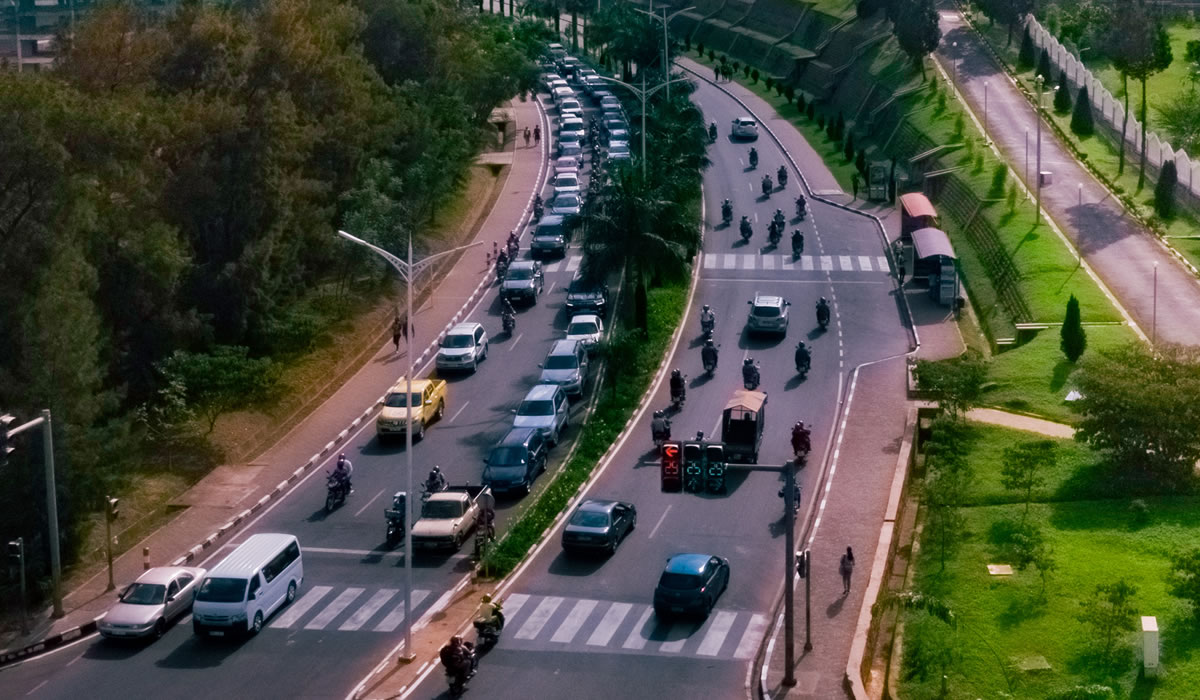
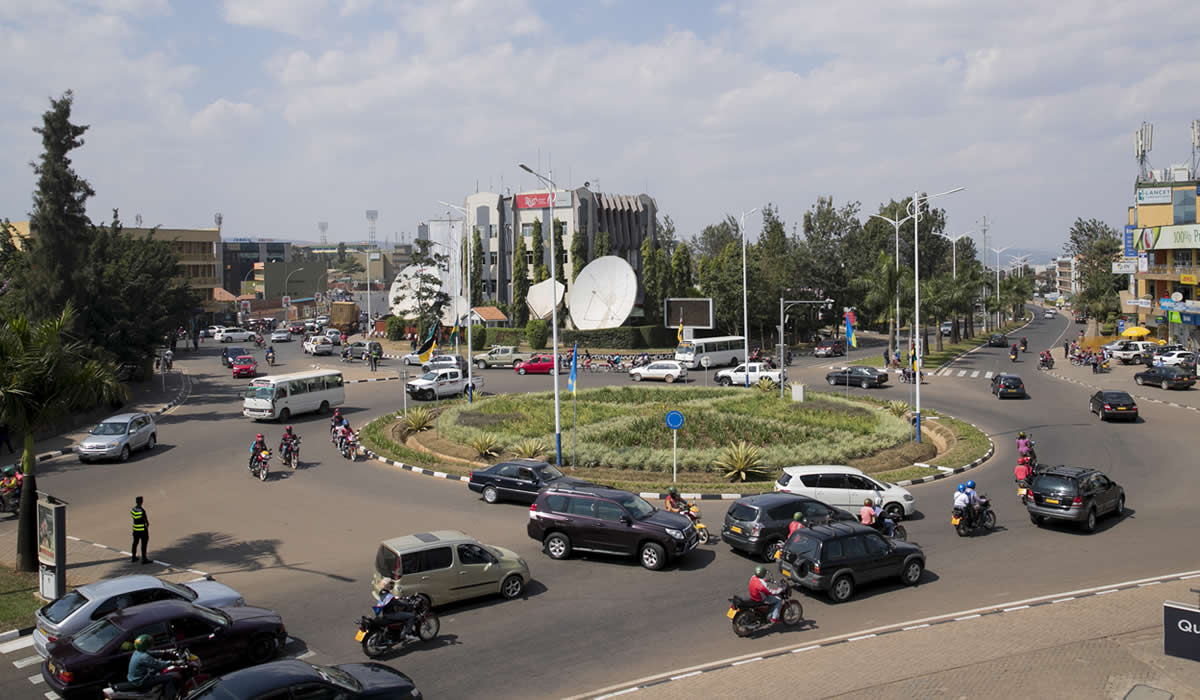
Kigali has developed urban roads, traffic lights and many active areas after sunset. However, drivers still need to watch carefully for pedestrians, motorcycles, cyclists and other road users.
When driving around Kigali at night:
- Follow traffic lights and road signs.
- Maintain a safe speed.
- Watch for pedestrians crossing roads.
- Give motorcycles sufficient space.
- Avoid using your phone.
- Keep your headlights and indicators working properly.
- Use appropriate parking areas.
- Avoid distracted driving.
Kigali is spread across hills and valleys, and Visit Rwanda highlights its good road connections with the rest of the country.
Driving outside Kigali
The situation can change once you leave the capital.
Some roads connecting major towns are well surfaced, but smaller roads can have different conditions. Pedestrians, cyclists, motorcycles and animals may also be harder to see after dark.
If you are unfamiliar with the route, try to complete the longer part of your journey before sunset.
Why Night Driving Requires More Attention
The biggest challenge with driving in Rwanda at night is reduced visibility.
During daylight, you can see road conditions, pedestrians and upcoming turns much earlier. At night, your headlights illuminate only part of the road ahead.
This means you have less time to react.
You may encounter:
- Pedestrians
- Cyclists
- Motorcycles
- Animals
- Slow-moving vehicles
- Roadside activity
- Sharp bends
- Poorly visible road edges
- Unexpected obstacles
Rwanda National Police has repeatedly emphasized visibility and safe behaviour among different categories of road users, including pedestrians and cyclists.
The solution is simple: slow down and increase your attention when visibility decreases.
Driving in Rwanda at Night on Mountain Roads
Rwanda is known as the Land of a Thousand Hills, and many routes involve hills, curves and changes in elevation.
This becomes especially important after sunset.
Mountain roads may contain:
- Sharp bends
- Steep climbs
- Descents
- Limited roadside lighting
- Fog or mist
- Pedestrians
- Motorcycles
- Narrow sections
If you are travelling toward Musanze, Rubavu or other hilly destinations, avoid rushing to reach your destination.
A journey that is comfortable during daylight can feel very different after dark when you are unfamiliar with the road.
For longer mountain journeys, leaving Kigali earlier can give you a much more comfortable travel experience.
Driving to Rwanda’s National Parks at Night
Many visitors rent cars because they want to explore Rwanda’s national parks.
Popular destinations include:
- Volcanoes National Park
- Akagera National Park
- Nyungwe National Park
If your itinerary includes one of these destinations, consider your arrival time carefully.
For example, if you are travelling from Kigali to Musanze for a gorilla trekking experience, arriving during daylight gives you more time to check into your accommodation, prepare for the following day and become familiar with the area.
For longer journeys toward Akagera or Nyungwe, planning an early departure can similarly reduce the need for unfamiliar night driving.
Visit Rwanda confirms that Rwanda’s road network connects the country’s major towns and tourism destinations, making road travel an important part of exploring the country.
How Rain Affects Driving in Rwanda at Night
Rain can make driving in Rwanda at night more challenging.
Water on the road can reflect headlights and make it harder to see clearly. Heavy rain can also reduce visibility and make road surfaces slippery.
If rain becomes heavy:
- Reduce your speed.
- Increase the distance between your vehicle and the vehicle ahead.
- Avoid sudden braking.
- Use the appropriate lights.
- Watch for standing water.
- Avoid driving through flooded areas.
- Stop somewhere safe if visibility becomes too poor.
Visit Rwanda notes that smaller roads can have varying conditions, particularly during the rainy season.
Don’t let a fixed arrival time pressure you into continuing when weather conditions have become unsafe.
Check Your Rental Car Before Driving at Night
Before leaving with your rental car, inspect the vehicle carefully.
This is especially important if your journey may continue after sunset.
Check the headlights
Make sure the headlights are working properly.
Also check:
- Brake lights
- Indicators
- Hazard lights
- Rear lights
Proper vehicle lighting is an important part of night-time visibility. Rwanda National Police has conducted road-safety operations emphasizing vehicle lighting and visibility.
Check the tyres
Look at the tyres before beginning your journey.
If something looks damaged or unusual, notify the rental company before leaving.
Check the windscreen
A dirty windscreen can make glare from headlights much worse.
Clean the windscreen and make sure your view is clear.
Check the mirrors
Adjust the rear-view and side mirrors before starting the vehicle.
Check the fuel level
Don’t start a long evening journey with very little fuel.
For routes outside Kigali, plan your fuel stops before leaving.
Take Photos of the Rental Car
Before driving away from the rental company, photograph the vehicle.
Take pictures of:
- Front
- Rear
- Both sides
- Wheels
- Mirrors
- Windscreen
- Existing scratches
- Existing dents
Ask the rental representative to record any existing damage on the inspection document.
This is good practice whether you are driving in Rwanda at night or during the day.
Plan Your Route Before Sunset
One of the easiest ways to make night driving safer is to plan before you leave.
Don’t wait until sunset to decide where you are going.
Before starting a longer journey:
- Check the route.
- Check the weather.
- Check your fuel.
- Confirm your accommodation.
- Estimate your travel time.
- Save important phone numbers.
- Download offline maps where possible.
- Identify possible stopping points.
Your navigation app is useful, but it should not be your only source of information.
Road conditions can change, and a suggested route may not tell you everything about visibility, weather or local road activity.
Don’t Rely Only on Navigation Apps
Google Maps and other navigation applications can be very helpful when exploring Rwanda.
However, visitors should remember that a map cannot always tell you what the road feels like in real conditions.
A route may include:
- Steep hills
- Sharp bends
- Narrow sections
- Poor weather
- Construction
- Temporary road changes
- Limited lighting
If you are unsure about a route, ask your accommodation or rental provider for practical advice before leaving.
Watch Carefully for Pedestrians and Cyclists
Pedestrians and cyclists are important road users in Rwanda.
At night, they can be harder to see, especially on roads without strong lighting.
Rwanda National Police advises pedestrians to use appropriate walking areas and crosswalks where available, while cyclists have also been advised to improve their visibility at night.
As a driver:
- Reduce speed near populated areas.
- Watch the edges of the road.
- Avoid distractions.
- Be especially careful near markets and villages.
- Don’t assume that an empty-looking road is completely clear.
Be Careful Around Motorcycles
Motorcycles are an important form of transportation in Rwanda.
When driving in Rwanda at night, give motorcycles enough space and be particularly careful when:
- Overtaking
- Approaching intersections
- Turning
- Passing through busy areas
- Driving on narrow roads
Never make a sudden manoeuvre simply because you think the road is empty.
Avoid Speeding at Night
Speed is one of the biggest factors you can control as a driver.
When visibility is reduced, excessive speed gives you less time to react.
Rwanda National Police uses speed-enforcement systems on roads in Rwanda and continues to emphasize responsible driving and compliance with speed limits.
Drive at a speed that allows you to stop safely within the distance you can see.
Never Use Your Phone While Driving
This point deserves special attention.
Rwanda National Police states that using a mobile phone while driving is prohibited and dangerous, and its road-safety campaigns repeatedly warn drivers about distracted driving.
If you need navigation:
- Set your route before driving.
- Use a suitable phone holder if permitted.
- Pull over somewhere safe before changing the route.
- Never type while the vehicle is moving.
Your destination can wait a few minutes.
Never Drink and Drive
Do not drive after drinking alcohol.
If you are planning an evening out, arrange another way to travel or use a professional driver.
Rwanda National Police’s road-safety campaign specifically advises drivers not to drink and drive.
This is particularly important at night when visibility is already reduced.
When Should You Hire a Driver?
Self-drive isn’t always the best choice.
A chauffeur-driven vehicle may be more convenient if:
- You are visiting Rwanda for the first time.
- You have a long itinerary.
- You are uncomfortable driving after dark.
- You are travelling on unfamiliar mountain roads.
- You have just arrived after a long flight.
- You want to enjoy the scenery instead of navigating.
- You have several destinations to visit.
Visit Rwanda confirms that tour operators can arrange vehicles with drivers and that rental agencies offer cars and 4x4s.
If you know that you will be travelling late, discuss a driver option with your rental provider before the trip.
What to Do If You Must Drive at Night
Sometimes a late journey cannot be avoided.
If you have to drive after sunset, prepare properly.
Before leaving
☐ Check the weather.
☐ Check your headlights.
☐ Check your tyres.
☐ Check your fuel.
☐ Charge your phone.
☐ Save your rental company’s contact number.
☐ Confirm your route.
☐ Carry the required vehicle documents.
☐ Make sure you are rested.
While driving
☐ Keep your speed under control.
☐ Watch for pedestrians.
☐ Watch for cyclists.
☐ Watch for motorcycles.
☐ Keep a safe following distance.
☐ Avoid unnecessary overtaking.
☐ Never use your phone.
☐ Never drive under the influence of alcohol.
What If Your Rental Car Breaks Down at Night?
If your vehicle develops a problem after dark:
- Move somewhere safe if possible.
- Turn on the hazard lights.
- Avoid standing in the traffic lane.
- Contact your rental company.
- Follow their breakdown instructions.
- Contact emergency services if there is an immediate danger.
Before starting your rental, ask the company what number you should call in an emergency.
Don’t wait until something goes wrong to search for the contact number.
What If You Have an Accident at Night?
If an accident occurs, prioritise safety first.
If someone is injured or there is an immediate emergency, seek appropriate emergency assistance.
Then contact the rental company and follow the accident-reporting procedures provided in your rental agreement.
Do not simply continue your journey without reporting an incident because the damage appears minor.
Take photographs and record useful information when it is safe to do so.
Your car rental insurance in Rwanda should also be understood before your trip. If you haven’t already, read our detailed guide on car rental insurance in Rwanda to understand the importance of checking coverage, exclusions and your responsibilities before collecting the vehicle.
Driving in Rwanda at Night: A Simple Safety Checklist
Before leaving, ask yourself:
- Are my headlights working?
- Are the brake lights working?
- Are the tyres in good condition?
- Is the windscreen clean?
- Do I have enough fuel?
- Is my phone charged?
- Do I know my route?
- Have I checked the weather?
- Do I have the required documents?
- Do I have the rental company’s emergency number?
- Am I rested?
- Do I really need to make this journey tonight?
If you cannot confidently answer these questions, consider postponing the journey or arranging a driver.
Kigali or Rural Rwanda: Which Is Better for Night Driving?
The answer depends on the road.
| Location | What to consider |
|---|---|
| Kigali | More urban infrastructure, but watch pedestrians and motorcycles |
| Major highways | Plan carefully and maintain a safe speed |
| Rural roads | Less lighting and greater need for caution |
| Mountain roads | Curves, hills and reduced visibility |
| National park routes | Plan arrival during daylight where possible |
| Heavy rain | Consider delaying the journey |
| Unfamiliar roads | Daylight is preferable |
The important thing is not to treat every road in Rwanda as if it has the same conditions.
Frequently Asked Questions About Driving in Rwanda at Night
Is driving in Rwanda at night safe?
It is possible, but conditions vary. Urban roads can be easier to navigate than unfamiliar rural or mountainous roads. Travellers should use extra caution after dark and plan longer journeys during daylight whenever possible.
Is it safe to drive in Kigali at night?
Kigali has developed urban roads, but drivers should still watch carefully for pedestrians, motorcycles, cyclists and other road users.
Should tourists drive outside Kigali at night?
If you are unfamiliar with Rwanda, it is generally better to complete longer journeys outside Kigali during daylight.
Can I drive to Volcanoes National Park at night?
You can discuss your route with your rental provider, but planning to arrive in the Musanze area during daylight is preferable when possible.
Do I need a 4×4 for night driving?
Not simply because it is night. A 4×4 should be selected based on your route and road conditions, not because darkness itself requires four-wheel drive.
For suitable vehicle options, see our 4×4 car rental in Rwanda page.
What should I check on my rental car before driving at night?
Check the headlights, brake lights, indicators, tyres, windscreen, mirrors, fuel and general vehicle condition.
Should I hire a driver instead of self-driving?
If you are unfamiliar with Rwanda, travelling long distances, arriving late or uncomfortable driving after dark, a professional driver may be the more convenient option.
What should I do if it rains heavily while driving at night?
Slow down, increase your following distance and avoid flooded roads. If visibility becomes too poor, stop somewhere safe until conditions improve.
Can I drive from Kigali to Uganda at night?
Cross-border travel requires proper planning and permission. If you are planning a Rwanda-Uganda journey, see our Kigali to Kampala car rental guide and confirm your exact route and travel arrangements before departure.
Plan Your Rwanda Journey Before Dark
Driving in Rwanda at night doesn’t have to be stressful, but it does require better preparation than a normal daytime journey.
For visitors renting a vehicle, the best approach is to understand your route, choose an appropriate vehicle, inspect it before departure, check the weather and allow enough time to reach unfamiliar destinations before dark.
Rwanda offers excellent opportunities for road travel, and Visit Rwanda highlights the country’s road network as an important way to explore its towns and tourism destinations.
If your itinerary involves long distances, mountain roads, national parks or late arrivals, consider whether a chauffeur-driven vehicle would make your journey easier.
Planning ahead means you can spend less time worrying about the road and more time enjoying Rwanda.
Ready to plan your journey? Contact Rwanda Cars For Rental with your travel dates, destinations and preferred vehicle, and ask about the best rental option for your itinerary.
Related Posts